
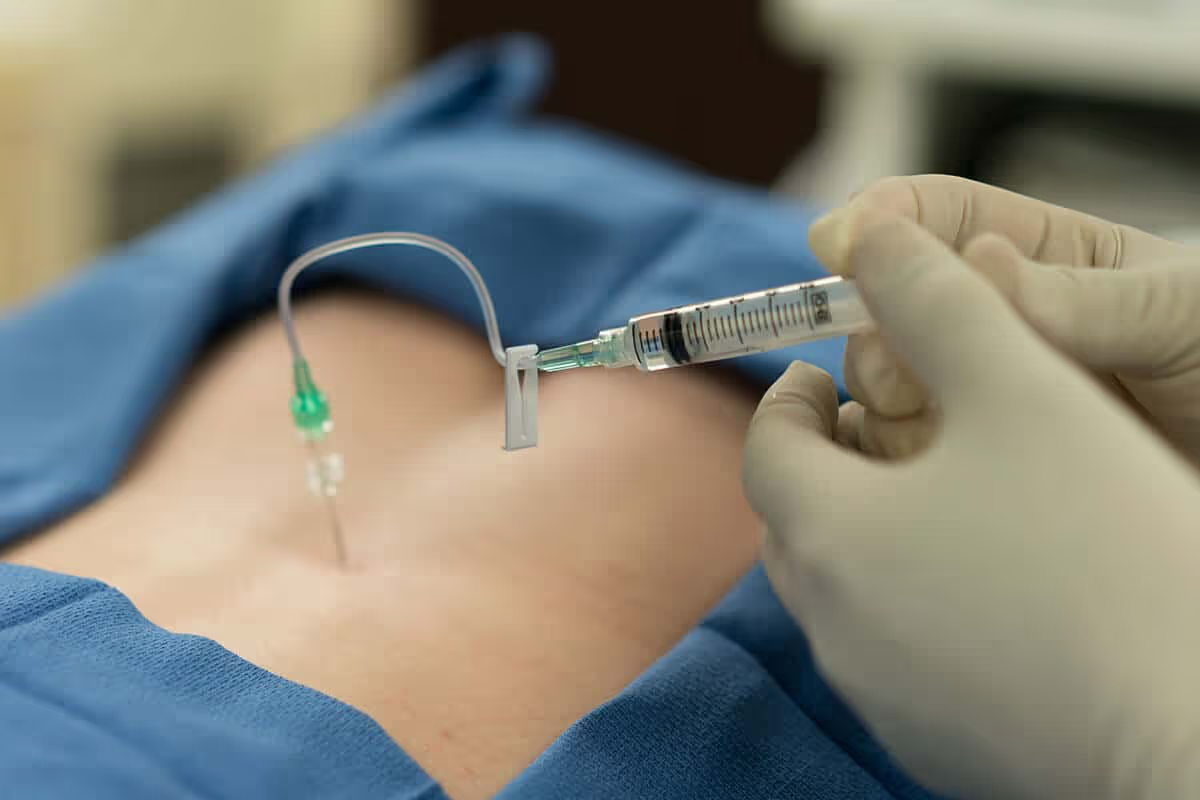
A targeted injection that delivers anti-inflammatory medication directly to the source of spinal nerve irritation, providing meaningful relief for back and neck pain.

An epidural steroid injection (ESI) is a medical procedure in which a corticosteroid (a type of anti-inflammatory medication) is injected into the epidural space of the spine. The epidural space is the area surrounding the spinal cord and nerve roots. The purpose of this injection is to reduce inflammation and swelling, which can help alleviate pain, especially in cases of conditions like herniated discs, spinal stenosis, sciatica, or radiculopathy. This can be done in the cervical, thoracic, lumbar, and caudal regions of the spine.
When a nerve in your spine becomes compressed or irritated, the surrounding tissue often swells and creates pressure that leads to pain, numbness, or tingling. That pain can travel down your arms or legs depending on which part of the spine is affected. An epidural steroid injection works by placing a powerful anti-inflammatory medication right next to the inflamed nerve, calming the irritation at its source rather than masking it with oral medications that have to travel through your entire body first.
This treatment has been used safely for decades and remains one of the most common and well-studied procedures in interventional pain management. It is not a surgical procedure, and most patients are able to go home the same day.
Epidural steroid injections are typically recommended for patients dealing with pain that radiates from the spine into the arms or legs. You may be a good candidate if you are experiencing any of the following:
Your doctor may suggest this treatment after more conservative options like physical therapy, rest, or oral medications have not provided adequate relief. ESIs can also be helpful as a diagnostic tool to confirm which nerve is causing your symptoms.
The procedure is performed in an outpatient setting and typically takes between 15 and 30 minutes. Here is what you can expect:
Before the procedure, you will lie face down on a procedure table. The skin over the injection site will be cleaned and numbed with a local anesthetic so you remain comfortable throughout.
Using fluoroscopy (a type of live X-ray), your doctor will guide a thin needle to the precise location in the epidural space near the affected nerve. Fluoroscopy ensures accuracy and safety by allowing the doctor to see exactly where the needle is positioned in real time. A small amount of contrast dye may be injected first to confirm proper needle placement.
Once the needle is in the correct position, a mixture of corticosteroid and local anesthetic is slowly injected. The corticosteroid works to reduce inflammation over the coming days and weeks, while the local anesthetic may provide some immediate short-term relief.
After the injection, the needle is removed and a small bandage is placed over the injection site. You will be monitored briefly before being discharged.
Epidural steroid injections are one of the more accessible interventional pain treatments. Most major insurance plans, including Medicare, cover this procedure when it is deemed medically necessary. Your out-of-pocket cost will depend on your specific insurance plan, deductible, and whether the procedure is performed in an office-based or hospital-based setting. Our team will verify your benefits and walk you through any expected costs before your appointment.
Recovery from an epidural steroid injection is relatively straightforward. Most patients are able to return to light activities within 24 to 48 hours.
On the day of the procedure, you should plan to take it easy. You may experience mild soreness at the injection site, which is completely normal and usually resolves within a day or two. Applying an ice pack for 15 to 20 minutes at a time can help with any discomfort.
You should avoid strenuous physical activity, heavy lifting, and soaking in water (such as baths, pools, or hot tubs) for the first 24 to 48 hours. Showers are fine the same day. Most patients are able to return to work and normal daily routines within one to two days, though this can vary depending on your job and activity level.
It is common to feel a temporary increase in pain for the first day or two after the injection before the steroid begins to take full effect. The anti-inflammatory benefits of the corticosteroid typically kick in within three to seven days, with maximum benefit often felt around two weeks after the procedure.
Many patients experience significant relief from an epidural steroid injection, though results can vary from person to person.
Some patients notice improvement within the first few days, while for others it may take up to two weeks for the full benefit to develop. The duration of relief also varies. Some patients enjoy months of relief from a single injection, while others may need a series of injections spaced several weeks apart for the best outcome.
A typical treatment plan may include up to three injections within a six-month period if needed. Your doctor will evaluate your response after each injection and adjust the plan accordingly. For many patients, the relief from ESIs provides a window of reduced pain that makes it easier to engage in physical therapy and rehabilitation, which can lead to longer-lasting improvement overall.
It is important to understand that epidural steroid injections are not a cure for the underlying condition. They are a tool to manage pain and inflammation so that you can function better and work toward recovery through other therapies.
There are a few important things to keep in mind as you prepare for your epidural steroid injection:
Medications: Let your doctor know about all medications you are currently taking, especially blood thinners (such as warfarin, Eliquis, or Plavix), aspirin, or anti-inflammatory medications like ibuprofen. You may need to stop certain medications several days before the procedure to reduce the risk of bleeding. Your doctor will give you specific instructions based on your medication list.
Allergies: Be sure to inform your doctor if you have any allergies, particularly to contrast dye, local anesthetics, or corticosteroids.
Eating and drinking: You may be asked to avoid eating or drinking for a few hours before the procedure, especially if sedation will be used.
Transportation: You will need someone to drive you home after the procedure. Even though sedation is not always used, the local anesthetic and the procedure itself can temporarily affect your comfort and mobility.
Diabetes: If you have diabetes, be aware that corticosteroids can temporarily raise blood sugar levels for several days after the injection. Monitor your blood sugar more closely during this time and discuss a plan with your doctor beforehand.
Infection: If you are currently experiencing a fever or active infection, your procedure may need to be rescheduled. Let your doctor know right away if you feel unwell before your appointment.
Pregnancy: If you are pregnant or think you may be pregnant, let your doctor know, as fluoroscopy involves a small amount of radiation.

The integration of AI into the legal industry is still in its early stages, but the potential is immense. As AI technology continues to evolve. We can expect even more advanced applications, such as:
Disc herniations can press on spinal nerves, causing sharp pain that radiates down the leg or arm. ESIs deliver relief directly to the irritated nerve.
Narrowing of the spinal canal puts pressure on the nerves inside. An epidural injection can reduce the surrounding inflammation and ease symptoms.
Epidural steroid injections can be performed at multiple levels of the spine. Cervical ESIs target the neck area for patients with arm pain and numbness, while lumbar ESIs address lower back and leg symptoms. Your doctor will determine the best approach based on your imaging and symptoms.
ESIs work best when combined with physical therapy and activity modification. The pain relief they provide creates a window for you to participate in rehabilitation more comfortably, which is often the key to longer-term improvement.


