A highly targeted approach to delivering anti-inflammatory medication directly to a specific irritated nerve root in the lower back, offering precise relief for leg and back pain.

A Lumbar Transforaminal Epidural Steroid Injection (TFESI) is a medical procedure used to treat pain in the lower back and legs caused by inflammation around the spinal nerve roots. Transforaminal refers to the method of delivering the medication into the epidural space through a specific path, the foramen, which is the opening where the nerve roots exit the spine. The procedure involves injecting a combination of corticosteroid (to reduce inflammation) and a local anesthetic (to provide immediate pain relief) into the epidural space near the affected nerve root. It's typically used to treat conditions like lumbar radiculopathy, sciatica, herniated discs, or spinal stenosis.
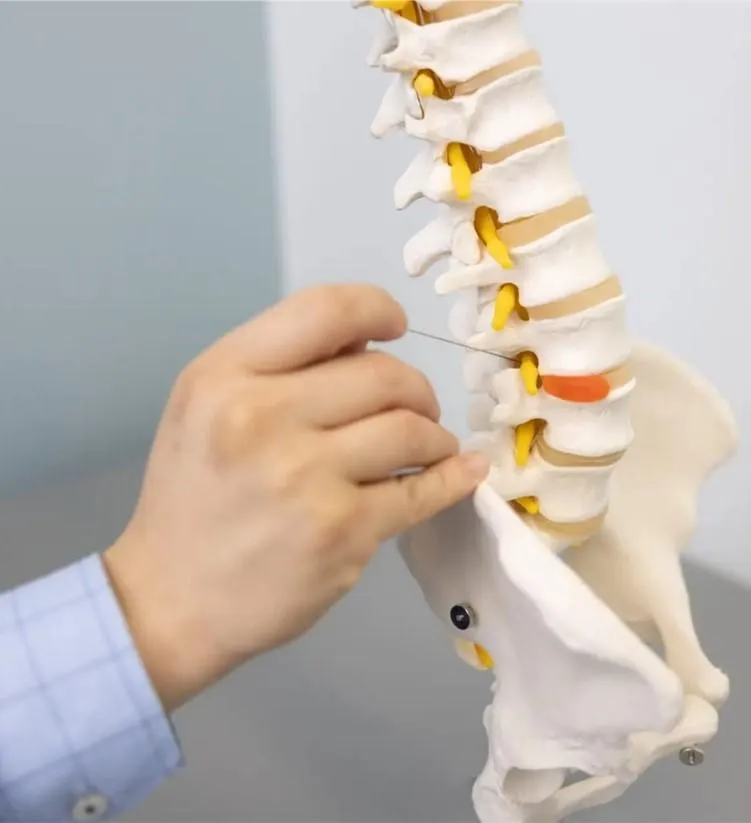
What sets a transforaminal approach apart from a standard epidural steroid injection is its precision. Instead of delivering medication broadly into the epidural space, this technique targets a single nerve root by approaching it through the foramen, the small bony window on the side of the spine where each nerve exits. This allows the medication to be concentrated right at the site of irritation, which can make it more effective for patients whose pain is clearly coming from one specific nerve.
Think of it this way: a standard epidural is like watering an entire garden, while a transforaminal injection is like using a drip line to deliver water exactly where one plant needs it. This precision is especially valuable when imaging studies like an MRI show a clear problem at one level of the spine, such as a disc herniation pressing on a single nerve root.
Lumbar transforaminal epidural steroid injections are recommended for patients with lower back and leg pain that is caused by irritation of a specific nerve root. You may be a candidate if you are dealing with:
This procedure is also frequently used as a diagnostic tool. If the injection provides significant relief, it confirms which nerve root is responsible for your symptoms, which can be extremely helpful in guiding future treatment decisions.
The procedure is performed in an outpatient setting and typically takes about 20 to 30 minutes. Here is what you can expect:
You will lie face down on a procedure table. The skin over your lower back will be cleaned and a local anesthetic will be applied to numb the surface.
Using fluoroscopy (live X-ray guidance), your doctor will carefully guide a thin needle toward the foramen at the specific spinal level being treated. This imaging is essential because the foramen is a small, precise target and the needle needs to be placed accurately to reach the correct nerve root while avoiding surrounding structures.
Once the needle is in position, a small amount of contrast dye is injected to confirm that the medication will flow to the right area. Your doctor will watch this on the fluoroscopy monitor in real time. After confirming proper placement, a mixture of corticosteroid and local anesthetic is slowly injected around the affected nerve root.
The needle is then removed and a bandage is applied. You will rest briefly in a recovery area before being discharged home.
Lumbar transforaminal epidural steroid injections are covered by most insurance plans, including Medicare, when medical necessity is documented. The cost can vary depending on your insurance coverage, the facility used, and whether additional levels are treated during the same visit. Our team will verify your benefits before the procedure so you know what to expect.
Recovery is similar to a standard epidural steroid injection. Most patients can resume normal light activities within 24 to 48 hours.
You may notice some immediate relief from the local anesthetic, but this will wear off within a few hours. A temporary increase in pain or soreness at the injection site is common during the first day or two. Ice packs applied for 15 to 20 minutes at a time can help manage this.
Avoid heavy lifting, vigorous exercise, and prolonged sitting for the first 24 to 48 hours. Showers are fine the same day, but hold off on baths, hot tubs, and swimming for at least 24 hours.
The corticosteroid typically begins to take effect within three to seven days, with the full benefit often felt around the one to two week mark. Your doctor may ask you to keep a pain diary during this period to track how you respond.
Lumbar transforaminal injections are considered one of the more effective epidural techniques for nerve-specific pain because of their targeted delivery.
Many patients experience meaningful relief that lasts weeks to months. The degree of relief depends on factors like the severity of the nerve compression, how long the symptoms have been present, and the underlying condition being treated.
If the first injection provides partial relief, a second or third injection may be recommended, typically spaced two to four weeks apart. A series of up to three injections within a six-month period is common. As with other epidural steroid injections, the goal is to reduce pain and inflammation enough to allow you to participate actively in physical therapy and rehabilitation, which provides the foundation for longer-term improvement.
For patients who respond well diagnostically but do not get long-lasting relief, this information can help guide the discussion about other treatment options.
Before your lumbar transforaminal epidural steroid injection, here are some key things to be aware of:
Medications: Inform your doctor about all medications, particularly blood thinners (warfarin, Eliquis, Xarelto, Plavix), aspirin, and NSAIDs like ibuprofen or naproxen. These may need to be stopped several days in advance. Your doctor will provide specific instructions.
Allergies: Report any allergies to contrast dye, anesthetics, or steroids.
Fasting: You may be asked to limit food and drink for a few hours before the procedure, depending on whether sedation is planned.
Transportation: Arrange for someone to drive you home afterward.
Diabetes: Steroid injections can temporarily elevate blood sugar. If you have diabetes, plan to monitor your levels more closely for several days and discuss a management plan with your doctor.
Infection or illness: If you have a fever, active infection, or are feeling unwell before your scheduled procedure, let the office know. It may need to be rescheduled.
Pregnancy: Notify your doctor if you are pregnant or may be pregnant, since the procedure involves fluoroscopy.

When a single nerve root is compressed or inflamed, pain can shoot down the leg in a specific pattern. The transforaminal approach concentrates medication exactly at that nerve for maximum relief.
Narrowing of the bony opening where a nerve exits the spine can cause persistent leg pain and numbness. This injection targets the inflammation right at the source of the compression.
A standard epidural delivers medication broadly into the spinal canal. A transforaminal injection takes a more targeted route, approaching through the side of the spine to reach a single nerve root. This precision often translates to better results when the problem is clearly at one level.
Beyond pain relief, this injection serves as a diagnostic tool. If you experience significant improvement, it confirms exactly which nerve root is responsible for your symptoms. That information is valuable for guiding decisions about physical therapy, future injections, or surgical planning.