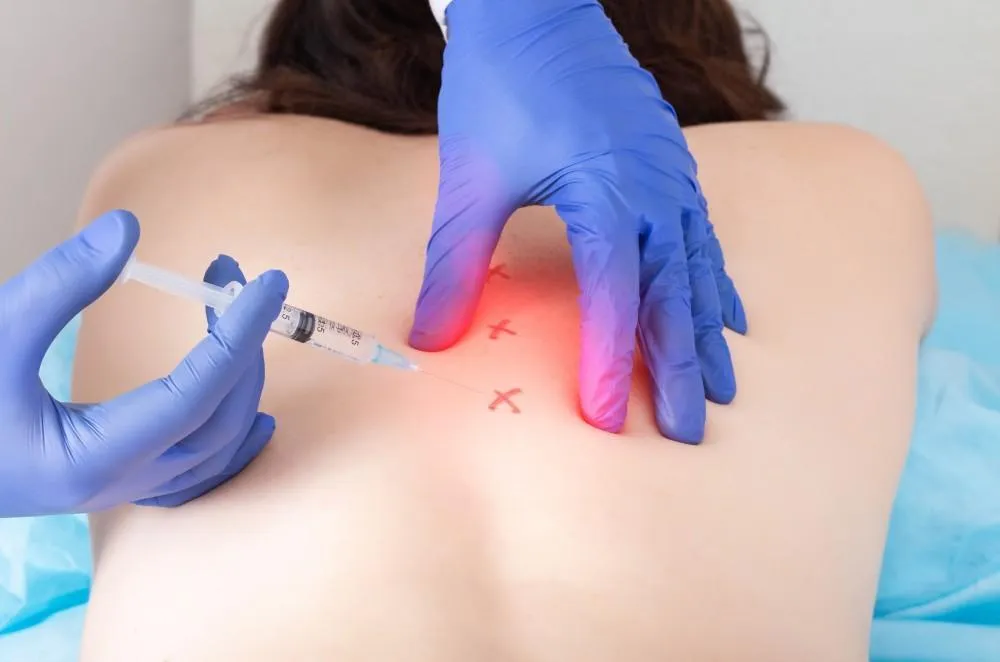
A quick, targeted injection that releases painful muscle knots and restores normal movement so you can get back to your daily life.

A trigger point injection (TPI) is a medical procedure used to treat painful areas of muscle tissue known as "trigger points." These are tight knots of muscle fibers that can develop when a muscle is overworked, injured, or stressed. Trigger points can cause localized pain, as well as referred pain (pain felt in other areas of the body). The injection typically contains a combination of a local anesthetic (to relieve pain) and a corticosteroid (to reduce inflammation), and is aimed at relaxing the affected muscle and providing pain relief.
If you have ever felt a hard, tender knot in your neck, shoulder, or back that just will not go away no matter how much you stretch or massage it, you have likely experienced a trigger point. These knots form when muscle fibers contract and refuse to release. They can develop from poor posture, repetitive movements, stress, injury, or even from guarding another painful area of your body for an extended period of time.
What makes trigger points especially frustrating is that they do not just hurt where the knot is located. A trigger point in your shoulder blade, for example, might send pain up into your neck or down your arm. This pattern of referred pain can make it tricky to identify the real source of the problem without a proper examination.
Trigger point injections work by delivering medication directly into the knotted muscle, which causes it to relax and release. The local anesthetic numbs the area immediately, while the corticosteroid helps calm any inflammation that has built up around the irritated tissue. In some cases, a "dry needling" technique may be used, where the needle itself (without medication) is enough to disrupt the knot and encourage the muscle to let go.
Trigger point injections can be helpful for a wide range of patients dealing with muscle-related pain. You may be a good candidate if you have:
This treatment is often used alongside other therapies like physical therapy, stretching programs, and ergonomic adjustments to address both the immediate pain and the underlying causes.
Trigger point injections are one of the fastest and most straightforward pain management procedures. The entire process typically takes just 10 to 15 minutes.
Your doctor will begin by examining the affected muscles and identifying the trigger points by feel. These knots are usually easy to locate because they are tender to the touch and often feel like firm lumps beneath the skin.
Once the trigger points are identified, the skin over each one is cleaned. Your doctor will then insert a thin needle directly into the trigger point and inject a small amount of local anesthetic and corticosteroid. You may feel a brief twitch or cramping sensation as the needle enters the knot, which is actually a good sign that the correct spot has been targeted. This twitch response indicates that the tight muscle band is releasing.
Multiple trigger points can be treated in a single visit. After the injections, the needle is removed and a small bandage is applied. No imaging guidance is needed for this procedure since the trigger points are identified through physical examination.
Trigger point injections are among the most affordable interventional pain treatments available. They are widely covered by insurance plans, including Medicare, when performed for documented myofascial pain. The cost is generally low even for patients paying out of pocket. Our office will verify your coverage and discuss any expected costs before your visit.
Recovery from trigger point injections is minimal. Most patients are able to return to normal activities the same day.
You may feel some soreness or achiness at the injection sites for the first 24 to 48 hours. This is a normal response and usually feels similar to the soreness you might experience after a deep tissue massage. Applying a warm compress or heating pad to the area can help ease this discomfort.
Gentle stretching of the treated muscles is actually encouraged after the procedure. Your doctor or physical therapist may give you specific stretches to perform at home to help maintain the muscle relaxation achieved by the injection.
Avoid intense exercise or heavy lifting for the first 24 hours. After that, you can gradually return to your full activity level. Staying hydrated and continuing to move are both helpful for recovery.
Many patients notice immediate improvement after trigger point injections due to the local anesthetic. Once the numbing effect wears off, there may be a brief return of soreness before the full effects settle in over the following days.
For some patients, a single round of injections is enough to break the pain cycle and allow the muscle to heal. Others may need a series of treatments, especially if the trigger points have been present for a long time or if there are multiple areas involved.
The best outcomes are typically seen when trigger point injections are combined with physical therapy, regular stretching, stress management, and any needed changes to posture or ergonomics. Addressing the root cause of why the trigger points developed in the first place is key to preventing them from coming back.
Here is what to keep in mind before your trigger point injection appointment:
Medications: Let your doctor know about all medications you take, including blood thinners and anti-inflammatory drugs. In most cases, you do not need to stop medications before this procedure, but your doctor will advise you based on your specific situation.
Clothing: Wear loose, comfortable clothing that allows easy access to the area being treated. For neck and shoulder trigger points, a tank top or button-down shirt works well.
Hydration: Drink plenty of water before and after the procedure. Well-hydrated muscles tend to respond better to treatment.
Expectations: While trigger point injections provide quick relief for many people, they work best as part of a broader treatment plan. Be prepared to follow up with stretching, physical therapy, or other recommendations from your doctor.
Activity: You can drive yourself home after the procedure and return to light activities right away. Just take it easy for the rest of the day and avoid anything that heavily strains the treated muscles.

Conditions We Commonly Treat With Trigger Point Injections
Chronic muscle knots that cause widespread pain and tenderness are the hallmark of myofascial pain. Trigger point injections release these knots and break the cycle of tension and discomfort.
Tight muscles in the neck and shoulders are a common driver of tension headaches. Releasing those trigger points can reduce headache frequency and intensity.
Trigger points often cause pain in areas far from the actual knot. A trigger point in your upper back might send pain up into your head, while one near your shoulder blade could radiate down your arm. Identifying and treating the true source is what makes this injection so effective.
Trigger point injections provide fast relief, but combining them with stretching, physical therapy, and ergonomic changes is the best way to keep the knots from coming back. Your doctor may recommend a follow-up plan to address the root cause.